
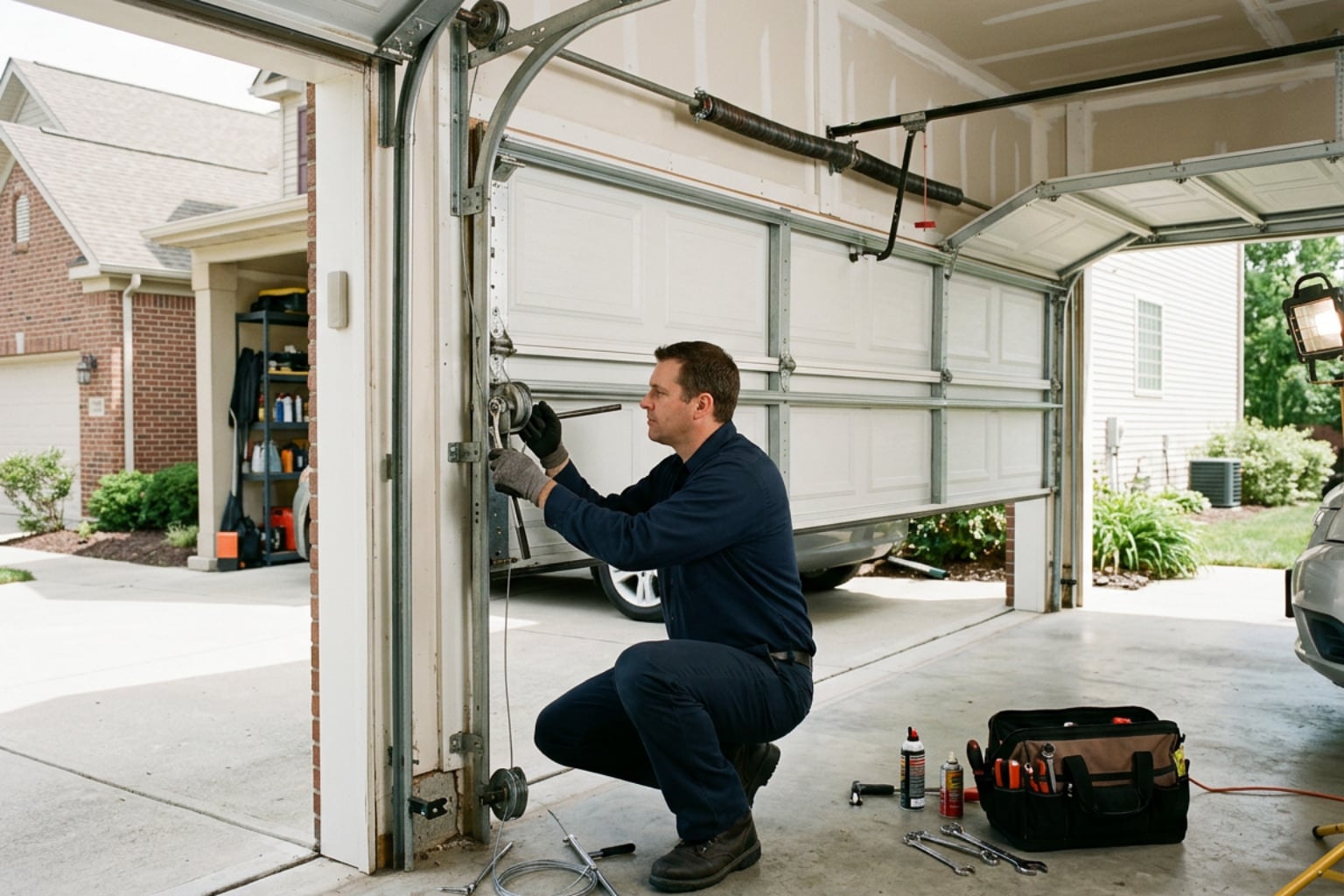
A garage door cable install sounds simple — until you realize these cables are under hundreds of pounds of spring tension and can snap with enough force to slice through drywall. If your door is hanging crooked, crashing down fast, or won’t move at all, a failed cable is likely the culprit.
Here’s how to replace a garage door cable (quick overview):
- Disconnect the garage door opener
- Secure the door open with locking pliers clamped to the track
- Release spring tension using winding bars (torsion) or unhook the spring (extension)
- Remove the old cable from the drum or pulley and bottom bracket
- Attach the new cable to the bottom bracket, then route it through the pulley or wind it onto the drum
- Re-tension the springs and test the door balance manually
- Reconnect the opener
Most homeowners can complete this job in under an hour with the right tools and a clear process — but the spring tension step is where things get dangerous if you rush it.
The rest of this guide walks you through every step in detail, covers both torsion and extension spring systems, and tells you exactly when it makes more sense to call a pro.
I’m Mark Dahan, owner of Pacific Experts Garage Door Repair. I’ve handled hundreds of garage door cable install jobs across Las Vegas, learning what goes wrong and what makes the difference between a safe repair and a trip to the emergency room. That hands-on experience is what this guide is built on.

Understanding Garage Door Cable Systems (Torsion vs. Extension)
Before we touch any tools, we need to understand the mechanical system we are working with. Garage doors rely on a combination of heavy-duty springs and steel aircraft cables to balance and lift doors that often weigh hundreds of pounds. If you notice your door lurching, hanging at a weird angle, or making scraping sounds, these are clear Warning signs of failing cables that require immediate attention.
There are two primary types of spring systems used on residential properties in areas like Summerlin NV and Henderson NV: torsion springs and extension springs. Each uses a distinct cable configuration to transfer energy and lift the door.
Torsion Spring Cables
Torsion spring systems are mounted on a metal shaft directly above the garage door opening. The spring winds up to store energy. On both ends of this shaft assembly, you will find aluminum cable drums. The lift cables attach to the bottom brackets at the bottom corners of the garage door, run vertically up the sides of the door, and wind tightly around these winding drums as the door opens.
Because the torsion spring transfers its immense torque directly to the shaft and drums, the cables are always under extreme tension when the door is closed. This configuration is highly efficient but requires specialized tools and extreme care during a garage door cable install.
Extension Spring Cables and Safety Cables
Extension spring systems are mounted horizontally above the upper tracks on both sides of the door. As the door closes, these springs stretch out to store energy. This system uses a series of pulleys and track brackets to route the lift cables from the bottom brackets up to the springs.
Crucially, extension spring setups should always include safety cables. Unlike lift cables, safety cables do not move the door. Instead, they run straight through the center of the extension springs and attach securely to the wall or track brackets. If a highly pressurized extension spring snaps, the safety cable acts as a spring containment barrier, preventing the broken metal from whipping across your garage. For a detailed breakdown of how these work, you can read the Good Money Sense safety cable guide.
Safety First: Crucial Precautions Before You Begin
We cannot stress this enough: working on garage door cables is inherently risky. A snapped cable under tension can whip across the room with enough force to cause severe physical injury or embed itself in wooden framing. Before beginning, review these essential safety tips for spring repair to protect yourself and your property.
First, always disconnect the power to your automatic garage door opener. Unplug the unit or shut off the breaker to prevent anyone from accidentally operating the door while you work. Second, never work alone. Having a second pair of eyes and hands is invaluable. Finally, use heavy-duty locking pliers (such as Vice-Grips) to clamp the door firmly to the tracks so it cannot move or fall unexpectedly while the cables are detached.
Releasing Spring Tension Safely
The single most dangerous step of a garage door cable install is releasing the stored tension in the springs. For a torsion system, you must never attempt to adjust the spring or loosen the cable drum set screws without using professional steel winding bars designed specifically for this task. Screwdrivers or pipes are not safe substitutes and can slip, leading to catastrophic injuries.
Always wear safety glasses and thick leather work gloves. Insert the winding bars fully into the winding cone, and release the tension slowly in 1/4 turn increments. Keep your head and body out of the path of the winding bars at all times. If you are dealing with an extension spring system, you must open the door completely to compress the springs and relieve their tension before securing the door in place with clamps.
Tools and Materials Needed for a Garage Door Cable Install
Having the correct tools on hand before you start will keep the project running smoothly and safely. Do not attempt to improvise with incorrect hardware. For additional context on parts selection, check out Gateway 2000’s guide on cable installation.
Assemble the following items before starting:
- New replacement cables (ensure they match your door’s height and weight specifications)
- Two steel winding bars (for torsion systems)
- Two pairs of locking pliers (Vice-Grips) or C-clamps
- Socket set and ratchet
- Adjustable wrench
- Flathead and Phillips head screwdrivers
- Safety glasses and heavy-duty work gloves
- A sturdy step ladder
Step-by-Step Guide: How to Install Garage Door Cables
Now that you have your tools ready and understand the safety protocols, we can begin the actual installation. If at any point during this process you feel uncomfortable or realize your springs are rusted or seized, stop immediately and contact our garage door cable repair services for professional assistance.

Step-by-Step Torsion System Garage Door Cable Install
Follow these steps to replace cables on a standard torsion spring system:
- Disconnect power and secure the door: Unplug the opener. Open the door fully and place locking pliers on the tracks directly beneath the bottom rollers on both sides to keep the door from falling.
- Unwind the torsion spring: Insert a winding bar into the winding cone of the spring. Loosen the set screws on the cone and unwind the spring slowly, one quarter-turn at a time, using both winding bars alternately. Repeat for the second spring if your door has a dual-spring setup.
- Remove the old cables: Loosen the set screws on the cable drums. Slide the drums inward slightly to slacken the cables. Unhook the cable loop from the bottom bracket at the bottom of the door, and slide the cable out of the drum slot.
- Attach the new cable to the bottom bracket: Take your new cable, slide the loop over the pin on the bottom corner bracket, and ensure it is seated securely.
- Route and wind the cable: Run the cable up the side of the door. Thread the upper end into the slot on the cable drum. Wind the cable tightly into the drum grooves, ensuring there are no overlaps or kinks. Slide the drum back to the end of the shaft and tighten the set screws. Do not over-tighten, as you can damage the shaft.
- Balance the tension: Repeat the process on the opposite side, making sure both cables have equal tension.
- Re-tension the springs: Use your winding bars to wind the torsion springs back to their original specification (typically 30 to 32 quarter-turns for a standard 7-foot door). Tighten the set screws on the winding cone.
Step-by-Step Extension System Garage Door Cable Install
Replacing cables on an extension spring system is slightly different because the springs stretch along the tracks:
- Open the door fully: This relieves almost all tension from the extension springs. Secure the door in this open position by clamping locking pliers to the tracks on both sides just below the bottom rollers.
- Disconnect the old cables: Unhook the lift cable from the track bracket and the bottom door bracket. Disconnect the cable from the pulley system.
- Route the new lift cable: Attach the loop end of the new cable to the bottom bracket pin. Thread the cable up and over the stationary pulley attached to the track frame, then back through the pulley attached to the end of the extension spring.
- Secure the cable end: Anchor the bare end of the cable to the track bracket or three-holed adjustment plate using secure cable clamps or S-hooks. Ensure both sides are adjusted to the exact same length.
- Route the safety cables: Thread the safety cable through the center of the extension spring, securing one end to the front wall bracket and the other to the rear track support hanger.
Adjusting Cable Tension and Testing the Door
Once your new cables are installed, you must verify that the tension is balanced. An unbalanced door will run crookedly, putting extra strain on your opener and rollers, which eventually leads to premature wear. For long-term care advice, read through our cable maintenance tips.
To test the door, carefully remove the locking pliers from the tracks. Pull the emergency release cord on your garage door opener to operate the door manually. Lift the door halfway up and let go. A perfectly balanced door should stay in place or drift only slightly. If it crashes down, the spring tension is too loose. If it flies upward, the tension is too tight.

Frequently Asked Questions About Garage Door Cables
How much does it cost to replace garage door cables?
The overall cost depends on whether you choose to go the DIY route or hire a local professional. Purchasing the raw materials and replacement cables yourself is relatively inexpensive, but you must factor in the cost of specialized safety gear like winding bars. Hiring a professional is highly recommended for safety and peace of mind. For a deeper look at resource allocation, check out our DIY vs professional spring repair comparison.
How long do garage door cables typically last?
On average, high-quality garage door cables last between 7 to 10 years. However, environmental factors in the Las Vegas valley—such as extreme summer heat, blowing desert dust, and friction—can accelerate wear. We recommend performing monthly visual inspections to catch fraying, rust, or loose strands before a sudden break occurs.
Can I replace a garage door cable myself or should I call a pro?
While a confident homeowner with the proper tools can complete a garage door cable install, it carries significant physical risk. If your cables snapped while the door was closed, or if you do not own proper steel winding bars, you should always call a professional. Working with stored spring tension is unforgiving, and a single mistake can result in severe injury.
Conclusion
A properly executed garage door cable install keeps your home secure and your family safe. While the steps are straightforward, the high-tension environment of garage door springs demands respect, patience, and the right tools. If you run into any issues, or if you simply prefer to have the job handled safely and quickly by local experts, we are here to help.
At Pacific Experts Garage Door Repair, we provide fast, reliable, and same-day service across Las Vegas, Henderson, Summerlin, North Las Vegas, and the surrounding areas. Contact us today to schedule our professional garage door repair services and keep your home running smoothly.
